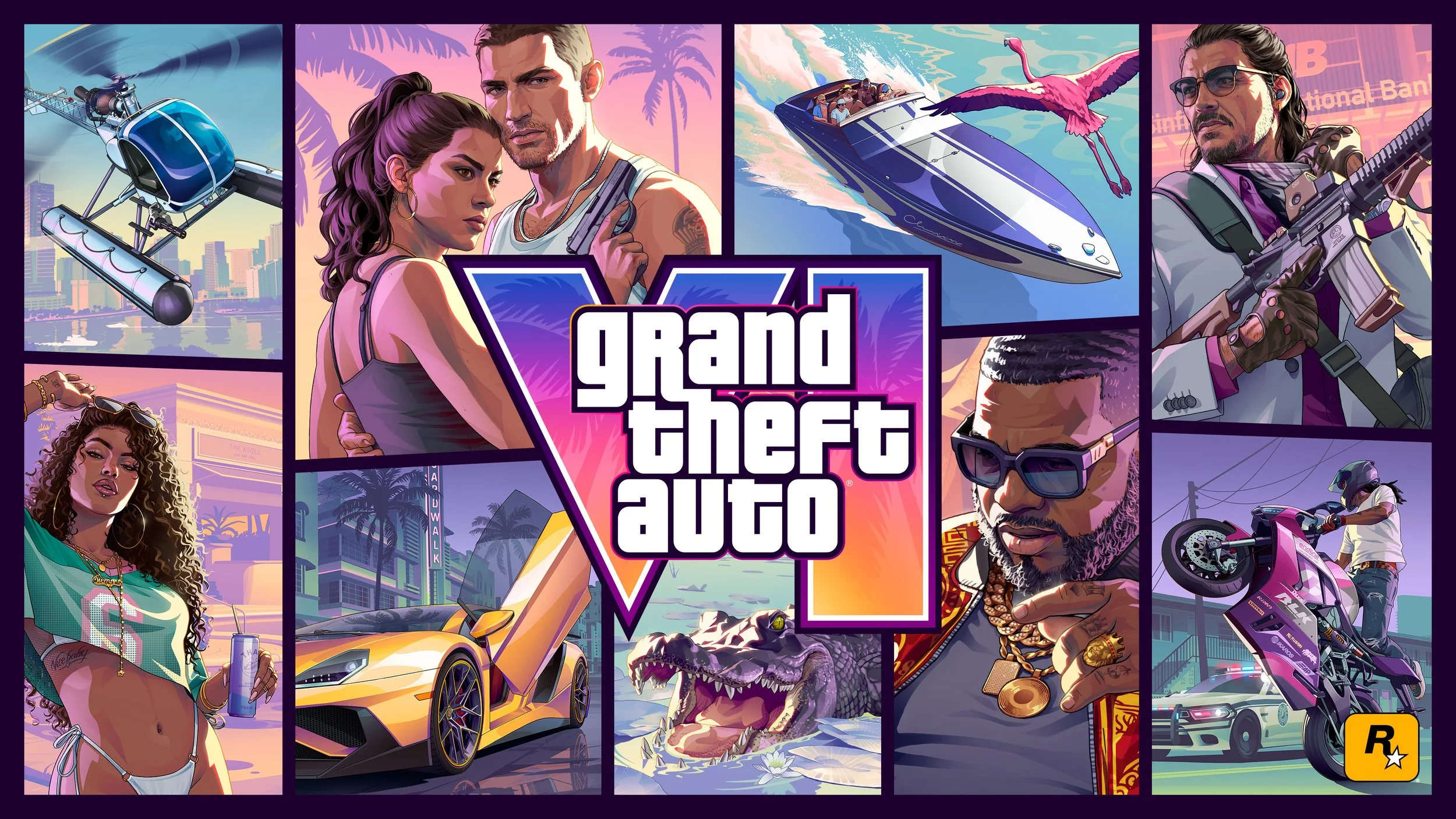
When Grand Theft Auto VI launches on November 19, the games industry will be watching the numbers: opening-week sales, revenue records, player engagement, and comparisons with the largest entertainment releases in history. Given the extraordinary success of Grand Theft Auto V, that attention is understandable. Few entertainment properties command enough consumer demand to influence the commercial planning of an entire industry, yet GTA VI has become a consideration for publishers evaluating their release schedules, particularly following Rockstar’s decision to move the launch from May to November 2026. Its influence extends beyond its own commercial performance, shaping the competitive environment in which other games must operate.
The broader economic impact, however, will be determined by what happens beyond Rockstar. GTA VI could bring lapsed players back to gaming, accelerate console purchases, stimulate spending across the ecosystem, and attract renewed investor attention to an industry that has faced several challenging years. At the same time, it could absorb a disproportionate share of consumer attention and discretionary spending, making it harder for competing games to attract and retain players. These outcomes are not mutually exclusive, and their coexistence is what makes GTA VI particularly significant. It could become an economic catalyst for the industry while simultaneously exposing the structural weaknesses of businesses competing within it.
The Blockbuster Effect
Major entertainment releases have always had the potential to expand their markets, and GTA VI could produce that effect on an unusually large scale. Consider a consumer who hasn’t purchased a new console in several years but decides GTA VI justifies the investment. With the game launching on PlayStation 5 and Xbox Series X|S, and no PC release date announced, that decision may require a hardware upgrade. The resulting purchase generates revenue for the console manufacturer, but the economic impact can extend through accessories, subscriptions, and additional games. A single release can activate spending across several parts of the industry, creating opportunities for businesses that have no direct involvement in the original product.
The same principle applies to lapsed players who have gradually reduced their participation or shifted their entertainment spending elsewhere. Some may return exclusively for Rockstar’s new game, while others may rediscover gaming more broadly. GTA VI will also attract attention across mainstream media, social platforms, and entertainment outlets that rarely cover the games business, reinforcing the industry’s cultural relevance and introducing its commercial scale to a wider audience. This combination of consumer reactivation, hardware adoption, and cultural visibility creates the potential for genuine market expansion, although not every dollar spent on GTA VI will represent incremental spending. Some purchases will replace spending that would otherwise have gone to another game or entertainment experience, making the distinction between new economic activity and redistributed demand essential to understanding the launch’s broader impact.
Can GTA VI Bring Capital Back to Gaming?
One of the effects I’ll be watching most closely is how GTA VI influences investor sentiment. The investment environment for gaming has become considerably more demanding as the extraordinary growth experienced during the pandemic gave way to normalization. Rising development budgets, expensive customer acquisition, studio closures, and disappointing returns from some major releases have reinforced concerns about the predictability of game investments. Capital remains available, but investors have become more selective, placing greater emphasis on sustainable economics, differentiated audiences, and credible paths to profitability.
GTA VI could provide a powerful reminder of the industry’s ability to create extraordinary commercial value. A launch of this magnitude attracts institutional investors, analysts, private equity firms, and capital providers who may not follow gaming closely. Exceptional commercial performance could encourage investors to reconsider the industry’s scale, growth potential, and ability to generate long-term returns. Publicly traded gaming companies could benefit from renewed sector interest, while private developers and publishers might encounter greater willingness among investors to evaluate new opportunities. Strategic acquirers could also reassess the value of established franchises, player communities, and businesses with recurring revenue.
There is a potential reinforcing effect when increased consumer activity supports revenue growth, improves investor confidence, and expands access to capital. That capital can fund development, acquisitions, infrastructure, and new businesses, extending the economic benefits beyond the original launch. However, investor attention and investor conviction are different things. GTA VI’s success would demonstrate the economics of an exceptional franchise, not necessarily that the average game has become less risky to develop or more profitable to operate. Investors may become more enthusiastic about gaming while concentrating an even greater share of their capital on established franchises and businesses with proven audiences. A temporary increase in gaming stock valuations would be encouraging, but the more meaningful outcome would be a sustained improvement in the industry’s ability to attract investment into businesses with credible long-term economics.
The Other Side of the Equation: Attention Is Finite
The potential benefits of GTA VI exist alongside an equally important competitive reality: consumer attention is finite. Players have a limited number of hours available for entertainment, and modern games increasingly compete for those hours rather than simply for the initial purchase. This is particularly consequential for businesses that depend on recurring engagement, ongoing transactions, and long-term retention. A consumer may purchase GTA VI alongside another game, but the decision to spend substantial time in Rockstar’s world inevitably reduces the time available for competing experiences.
For premium publishers, that competition may appear in weaker launch-window sales or slower conversion. For live-service businesses, the consequences can extend further because reduced activity affects retention, social engagement, monetization, and the efficiency of future customer acquisition. These pressures can reinforce one another as declining participation reduces the social value of an online experience for those who remain, potentially accelerating disengagement and increasing the cost of recovery. This is why publishers carefully manage release calendars around major entertainment events. The concern extends beyond protecting initial sales to preserving the momentum required to establish and sustain an audience.
GTA VI could therefore stimulate hardware sales and broader consumer interest while weakening engagement across competing games. Those outcomes reflect the difference between expanding the overall market and redistributing value within it, a distinction that becomes increasingly important as the industry shifts toward businesses built on persistent player relationships rather than isolated transactions.
A Rising Market Doesn’t Lift Every Game Equally
The games industry is not a single economic system in which increased demand benefits every participant proportionally. Hardware manufacturers, platforms, premium publishers, live-service operators, and technology providers depend on different sources of revenue, and GTA VI could influence each of them differently. More importantly, companies enter this period with varying degrees of structural resilience, which will determine how effectively they absorb competitive pressure and participate in any broader market expansion.
Consider two equally capable publishers operating over several years, both producing strong games and attracting substantial audiences. The first depends primarily on periodic releases, third-party distribution, and reacquiring consumer attention with each launch. The second has invested in persistent player relationships, direct communication channels, ongoing commerce, and communities that remain active between releases. When an event like GTA VI captures industry attention, both businesses face competitive pressure, but the economic consequences differ because of the architecture supporting their player relationships.
The first publisher may need another marketing campaign or product release to reestablish its connection with consumers, while the second has more options to maintain communication, understand changing behavior, sustain community participation, and encourage players to return. Neither business is immune to competition, but over multiple cycles, modest improvements in retention and reductions in reacquisition spending can compound into meaningful financial advantages. The difference arises from structural design rather than creative capability, demonstrating why participation in a growing market is not equivalent to possessing a durable competitive position within it.
What Rockstar Has Already Demonstrated
Rockstar itself provides one of the clearest examples of how these advantages accumulate over time. Grand Theft Auto V launched in 2013 and has remained commercially relevant across three hardware generations. Its continued sales, the longevity of GTA Online, and the surrounding ecosystem of creators, streamers, and roleplaying communities demonstrate how a premium franchise can sustain an economic relationship with players over many years. GTA Online has also demonstrated Rockstar’s ability to operate recurring commerce, although how that model will evolve alongside GTA VI remains an open question.
Free-to-play publishers have operated persistent game economies for years, so the underlying model is not new. What distinguishes Rockstar is its ability to combine extraordinary premium demand with cultural relevance, established audiences, and years of accumulated player relationships. That accumulated value contributes directly to pricing power. GTA VI’s $79.99 standard edition represents a premium over the $69.99 benchmark associated with many major releases, while its $99.99 Ultimate Edition raises additional questions about how publishers allocate content and value between editions. The more important economic consideration is that Rockstar can command premium pricing because it has spent years building consumer expectations, differentiated entertainment value, and franchise trust. Other publishers cannot simply adopt the same pricing structure and expect comparable demand.
Rockstar also possesses unusual leverage within the distribution ecosystem because platforms benefit from carrying a franchise of this scale, just as Rockstar benefits from access to their installed bases. Most publishers do not enjoy that degree of reciprocal dependence, making the distinction between distribution access and structural control particularly important. Digital distribution does not automatically create direct customer relationships, and publishers can reach millions of players through third-party platforms while retaining limited control over identity, commerce, and ongoing engagement. The strategic consideration is not whether platforms provide value, but whether publishers retain sufficient control over their most important economic relationships to preserve flexibility when market conditions change.
The Real Test Comes After Launch
The immediate commercial performance of GTA VI will provide an important measure of consumer demand, but understanding its broader industry impact will require looking beyond the initial sales figures. I’ll be watching whether the launch produces sustained increases in hardware adoption, active players, and overall industry spending rather than simply redirecting existing demand toward Rockstar. Equally important will be the effect on engagement across competing games, how quickly those businesses recover, and whether renewed investor attention translates into sustained financing activity, strategic investment, and confidence in the industry’s long-term economics.
The response from publishers will be particularly revealing because major market events expose weaknesses in customer relationships, acquisition efficiency, revenue concentration, and business continuity. Companies that use those lessons to strengthen their operating architecture may emerge in a better position, even if they experience near-term competitive pressure. This is where the five pillars of a modern game business become relevant: Relationships, Commerce, Intelligence, Trust, and Time. Relationships reduce dependence on repeatedly acquiring the same audience, Commerce converts participation into sustainable economic value, Intelligence improves decisions about engagement and investment, and Trust gives players confidence to continue participating. Time allows those advantages to reinforce one another and compound across successive product cycles, influencing the quality of revenue, resilience of the business, and ultimately enterprise value.
GTA VI may bring more consumers into gaming, stimulate spending, and remind investors of the extraordinary scale of interactive entertainment. Those benefits could extend well beyond Rockstar, but the launch will also intensify competition for the industry’s most constrained resource: player attention. The resulting pressure may reveal which businesses have established durable economic relationships and which remain dependent on the success of their next release.
The industry will spend the opening weeks counting GTA VI’s sales and celebrating its records, but those numbers will tell only part of the story. The more consequential measures will be whether the launch expands the market, where the additional spending and investment flow, and which companies can convert that opportunity into lasting economic value. A blockbuster can bring players, spending, and capital into an industry, but it takes durable businesses to turn that momentum into sustained growth.