Is Fandom More Valuable Than Content?
How entertainment companies can turn the excitement surrounding great content into lasting relationships and enduring business value.
After decades working across games and entertainment, one of the biggest changes I’ve witnessed is how companies think about the value of their audiences. For much of my career, the business was built around launches. We spent enormous amounts of money generating awareness, building excitement, and driving consumers toward a release. Then, once the launch window passed, much of that momentum simply evaporated.
I’ve often compared this to running the air conditioning with the windows open. We spent heavily creating something valuable, but we hadn’t built the systems to retain enough of it. We’d generate tremendous interest around a new release, capture a wave of sales, and then start much of the process over again when it came time to launch the next one. The audience was still out there, but our ability to maintain a direct relationship with those consumers was limited.
Of course, fandom has always existed. Some of the world’s most successful entertainment franchises have sustained passionate audiences for generations. What’s changed is our ability to engage those audiences continuously, rather than relying primarily on the next movie, game, album, or product release to bring them back. Digital platforms, communities, and commerce have created new opportunities to build lasting relationships that extend well beyond individual releases.
As New York Comic Con celebrates its 20th anniversary this weekend, it offers a compelling illustration of just how valuable those relationships have become and how much opportunity remains for the companies behind them.
The Growing Economics of Fandom
When New York Comic Con first opened its doors in 2006, it attracted more than 33,000 attendees. By 2025, attendance had reached approximately 250,000, representing more than sevenfold growth over two decades. What began as a gathering of comic enthusiasts has become one of North America’s largest celebrations of entertainment and popular culture.
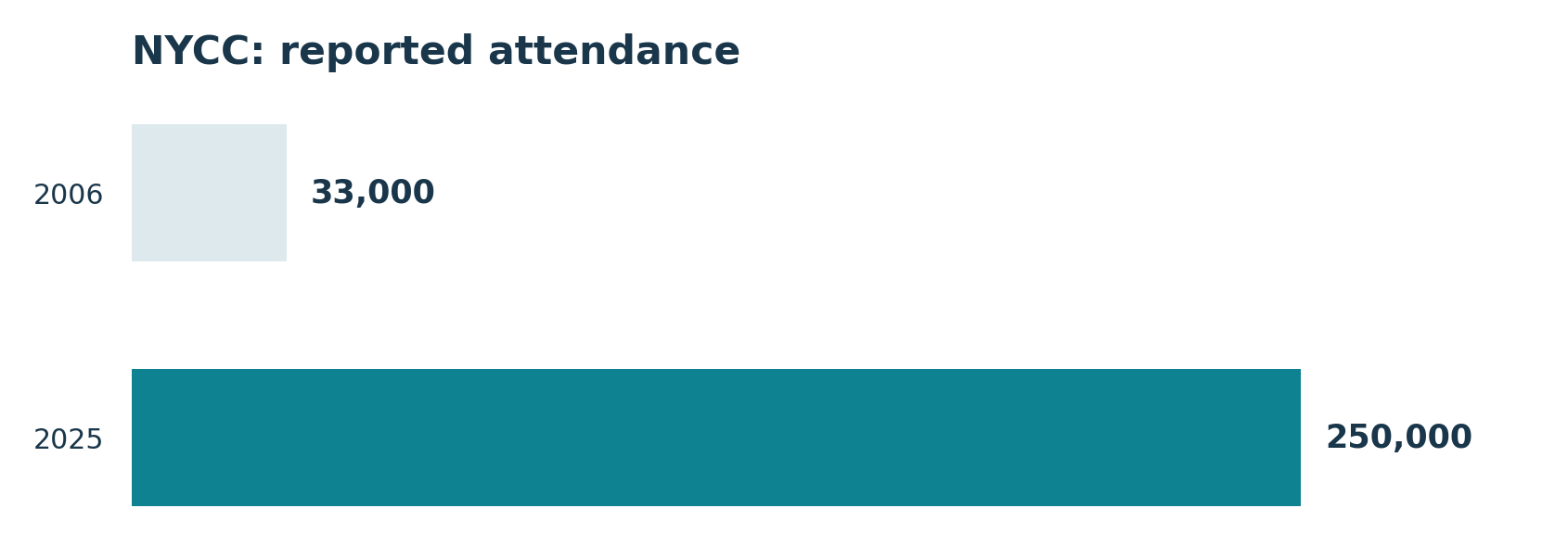
Sources: ICv2, May 24, 2006; New York Comic Con official press kit, 2025 milestone. The 2006 figure counts unique attendees; the 2025 “fans attended” figure may follow a different methodology.
The significance of that growth extends beyond the number of people walking through the convention doors. Fans travel to meet creators, celebrate their favorite characters, discover new stories, collect merchandise, and connect with communities that have become meaningful parts of their lives. Their enthusiasm can last for years or even decades, crossing generations and extending far beyond the original content that introduced them to a franchise.
For entertainment companies, this behavior represents an enormous commercial opportunity. According to Licensing International’s 2026 Global Licensing Industry Study, worldwide retail sales of licensed character and entertainment merchandise and services reached $161.8 billion in 2025, an increase of 8% over the previous year. That figure captures only one portion of the broader economic activity surrounding entertainment intellectual property, but it demonstrates how valuable these relationships can become.
What makes this particularly interesting is that fans rarely think about intellectual property the way entertainment companies do. They don’t organize their enthusiasm around licensing categories, distribution agreements, or corporate business units. They see characters they love, worlds they want to explore, and stories they want to be part of. Their relationship is with the experience and community surrounding it, regardless of which company or platform delivers the next interaction.
From Content Consumption to Participation
Historically, much of the entertainment business was organized around discrete transactions. Studios released films, publishers sold books, record labels distributed albums, and game companies shipped products. Each release created an opportunity to capture consumer spending, supported by marketing campaigns designed to concentrate attention around a particular moment in time.
That model produced extraordinarily successful businesses, and it remains an important part of the industry today. But it also created an inherent limitation. When the primary commercial relationship revolves around a specific release, companies must continually rebuild momentum to drive the next transaction. Even when consumers develop strong emotional attachments to a franchise, the business may lack the infrastructure to maintain those relationships between releases.
The growth of digital entertainment has fundamentally expanded what’s possible. Audiences can now participate in their favorite franchises through games, online communities, live events, collectibles, digital experiences, and direct interactions with creators. These activities create opportunities for engagement that aren’t dependent on a new theatrical release, television season, or game launch.
Participation also changes the nature of the relationship. A consumer who watches a movie may become a fan, but someone who joins a community, attends events, collects merchandise, or spends hundreds of hours exploring a fictional world develops additional connections to that intellectual property. Those experiences reinforce one another, creating deeper emotional investment and more reasons to remain engaged.
Research is beginning to quantify the commercial significance of these relationships. Deloitte’s 2026 Digital Media Trends report found that streaming subscribers who identify as fans spend an average of $71 per month on video streaming services, compared with $56 among non-fans, a difference of approximately 27%. Fans also report spending 51 additional minutes per day on entertainment activities. While these figures don’t establish that fandom itself causes higher spending, they demonstrate the stronger commercial engagement associated with consumers who identify as fans.
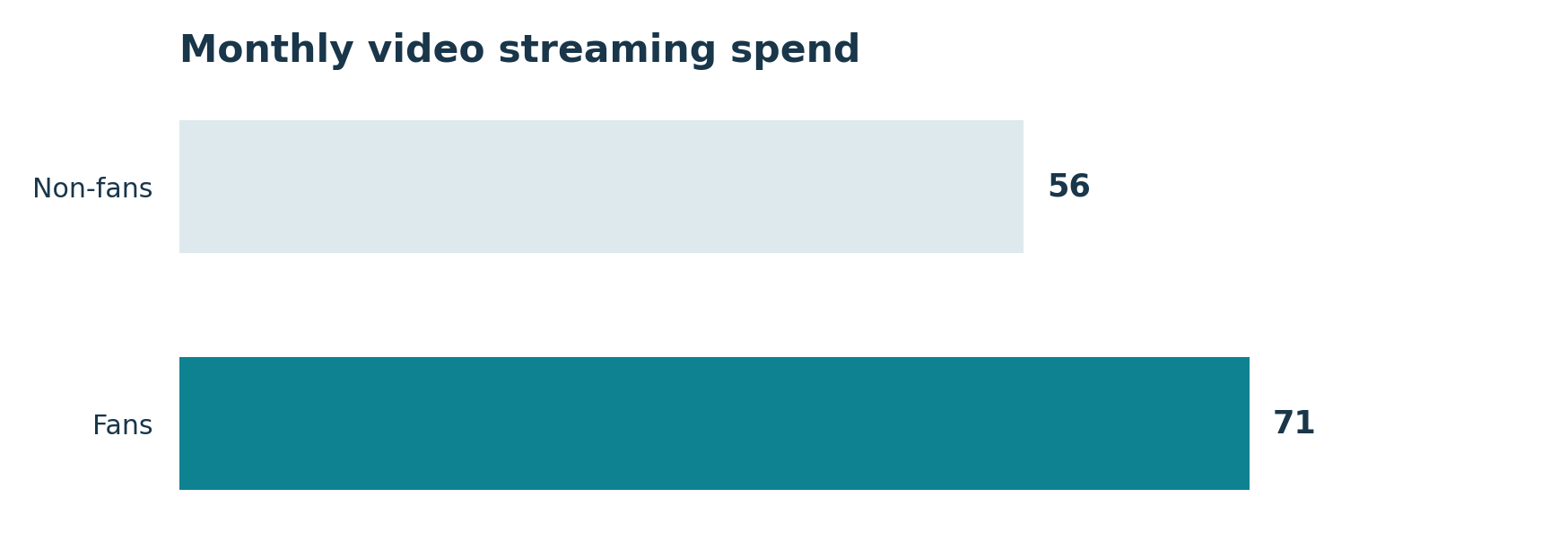
Average monthly video streaming subscription spending among subscribing respondents. Source: Deloitte, 2026 Digital Media Trends; US consumer survey.
The challenge for entertainment companies is translating that enthusiasm into relationships they can continue building. A franchise may have millions of passionate fans spread across social networks, streaming services, online marketplaces, and gaming platforms, yet the company behind that franchise may know remarkably little about those individuals or have limited ability to engage them directly.
Having Fans Isn’t the Same as Owning the Relationship
This distinction is becoming increasingly important as entertainment companies expand across platforms and commercial channels. A large social following can demonstrate extraordinary audience interest, but it doesn’t necessarily provide the company with meaningful access to those consumers. Algorithms determine which messages get seen, platforms control much of the customer experience, and intermediaries frequently control the transaction and resulting customer data.
In many ways, this recreates the same problem we’ve faced for decades, only in a more digitally sophisticated environment. Companies invest heavily in content and marketing that generate enormous fan engagement, but much of the resulting audience relationship remains outside their control. They may have succeeded in creating the fandom while leaving another business positioned to capture much of its ongoing commercial value.
The shift toward multi-channel fandom makes this challenge particularly significant. Deloitte found that 55% of fans say their interests often lead them to engage across multiple platforms, increasing to 71% among Gen Z and 67% among millennials. Younger audiences are developing relationships with entertainment through combinations of streaming, social media, games, merchandise, and live experiences, often moving between these environments without regard for the commercial boundaries separating them.
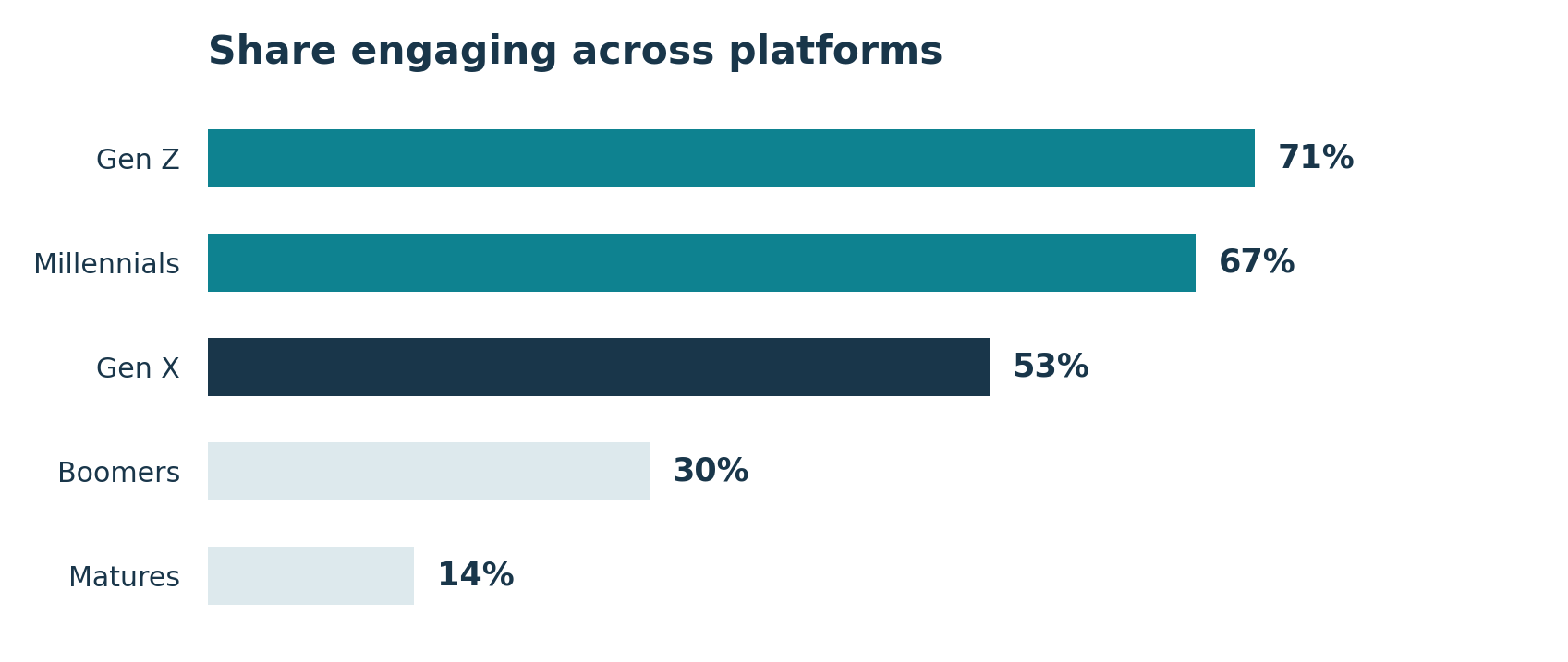
Percentage of fans who say fandom often leads them to engage across platforms. Overall: 55%. Source: Deloitte, 2026 Digital Media Trends; 2,977 US fans.
For entertainment companies, this creates both an opportunity and a challenge. A fan might discover a franchise through social media, watch it on a streaming platform, purchase merchandise through a marketplace, and participate in a related game. Each interaction strengthens the fandom, but those activities don’t automatically translate into a direct commercial relationship with the company behind the intellectual property.
Building a direct relationship changes that equation. When companies establish their own customer touchpoints through communities, websites, commerce channels, loyalty programs, and connected experiences, they gain the ability to understand their audiences and serve them across multiple interactions. They can recognize returning customers, learn what those customers value, and create experiences that strengthen engagement over time.
Importantly, this doesn’t mean abandoning third-party platforms or attempting to move every transaction into a proprietary ecosystem. Platforms remain essential to discovery, distribution, and audience growth. The opportunity is to complement those channels with direct relationships that give companies more influence over the customer experience and reduce their dependence on any single intermediary.
The objective should be a connected, multi-channel business where each interaction contributes to a deeper understanding of the customer and a stronger relationship over time. Doing that well requires thoughtful customer consent, interoperable systems, and commercial capabilities that support the audience wherever they choose to engage.
What the Game Industry Has Learned
The video game industry offers an important perspective on this evolution because games have always been built around participation. Unlike most traditional entertainment formats, games require audiences to become active participants in the experience. Players make decisions, invest time, develop skills, form relationships, and often establish identities within the worlds they inhabit.
Over time, the business models surrounding games have evolved to support these relationships. We’ve developed sophisticated capabilities around live operations, community management, ongoing content development, audience analytics, and digital commerce. Many successful games now operate as persistent entertainment experiences, with businesses designed to sustain engagement over years rather than concentrate their commercial opportunity around an initial release.
We’ve also learned that understanding and serving players directly can be just as important as attracting them in the first place. The evolution toward direct-to-consumer commerce, first-party communities, and connected player experiences reflects a growing recognition that developers and publishers need stronger relationships with the audiences they’ve worked so hard to build. Distribution platforms remain valuable partners, but relying entirely on those platforms can limit a company’s ability to develop its own customer relationships.
This evolution hasn’t been without challenges. Building persistent experiences requires ongoing investment, careful management of player expectations, and a willingness to balance commercial objectives with the long-term health of the community. We’ve also seen that attempting to turn every game into a live service can undermine the very experiences that make those games appealing in the first place.
Nevertheless, the broader lesson is important. The relationship between an audience and a great entertainment experience can continue long after the initial transaction, creating opportunities for additional commerce, stronger communities, and greater resilience against the natural fluctuations of individual release cycles.
These capabilities are increasingly relevant beyond games. Film studios, television networks, publishers, and other entertainment businesses are exploring ways to extend their relationships with audiences through interactive experiences, communities, events, and digital commerce. The opportunity is to develop a more continuous relationship with consumers while preserving the creative qualities that attracted those audiences in the first place.
Building Durable Businesses Around Fandom
In my book, Durable Advantage: Five Pillars of the Modern Game Business, I explore five capabilities that help companies build lasting competitive advantages: Relationships, Commerce, Intelligence, Trust, and Time. While the framework emerged from decades in the game industry, I believe its underlying principles are increasingly relevant across the broader entertainment business.
Fandom illustrates how these capabilities reinforce one another. Relationships provide the connection between a company and its audience, while Commerce creates opportunities to translate that relationship into sustainable revenue. Intelligence helps companies understand what their audiences value, and Trust ensures those relationships remain healthy as commercial opportunities expand. Time allows these capabilities to compound, making each successive interaction more valuable than an isolated transaction.
The importance of Time becomes particularly clear when considering the longevity of fandom. Deloitte found that 49% of fans say the time and money they devote to their fandom has remained consistent across different phases of their lives. That suggests the economic value of a strong audience relationship can extend well beyond a single product cycle, with opportunities to develop across many years and successive generations of entertainment experiences.
This is why I believe entertainment companies need to think beyond individual releases and even beyond the size of their fan communities. The real opportunity is to develop the capabilities that allow audience relationships to grow in value over time. That requires more than producing great content or maintaining active social channels. It requires coordinated efforts across content development, marketing, distribution, community management, licensing, and commerce.
It also requires a broader understanding of how success is measured. Opening weekend revenue, first-month sales, streaming performance, and social engagement remain valuable indicators, but they capture only part of the picture. Companies also need to understand how audiences engage between releases, whether those relationships extend across different experiences, and how much of the resulting value they’re able to retain within their businesses.
There’s an important balance to maintain in this process. Fans develop emotional relationships with intellectual property because the underlying stories, characters, and experiences mean something to them. Companies that treat every fan interaction primarily as another monetization opportunity risk weakening those relationships. The most durable businesses create experiences that audiences genuinely value, allowing commercial opportunities to grow naturally from the strength of those connections.
For me, this is one of the most important distinctions between building a successful entertainment product and building an enduring entertainment business. A successful release creates value at a particular moment. An enduring business develops the capabilities to preserve and expand that value over time, even as individual products, platforms, and consumer behaviors change.
Finally Closing the Windows
Looking back across my career, I can see how much of the entertainment industry has evolved from chasing individual transactions toward cultivating long-term relationships. The transition is far from complete, and there will always be a place for great standalone experiences. But the companies best positioned for the future will increasingly be those capable of sustaining meaningful connections with audiences across multiple experiences, platforms, and commercial channels.
New York Comic Con offers a powerful reminder of what that looks like in practice. The fans filling the convention halls this weekend are celebrating stories and characters that have become part of their lives. Many of those relationships began years ago, through a movie, television show, comic, or game, and have continued to grow through entirely different experiences. The question for entertainment companies is how effectively they’re participating in those relationships and whether they’ve built the capabilities to sustain them.
Great content brings audiences in, and great franchises give them reasons to stay. But building a durable entertainment business requires turning those connections into lasting relationships that create value for both fans and the companies serving them. That’s how the excitement surrounding individual releases can become something far more valuable and enduring.
After decades of running the air conditioning with the windows open, perhaps we’re finally learning how to close them.
Sources
ICv2, New York Comic-Con Announces 2007 Dates, May 24, 2006.
New York Comic Con, Official Press Kit, 2026.
Licensing International, 2026 Global Licensing Industry Study, May 2026.
Deloitte, 2026 Digital Media Trends: Capturing Always-On Fandom Between Releases and Seasons, March 25, 2026.
